A complete training system · 0 to 1000
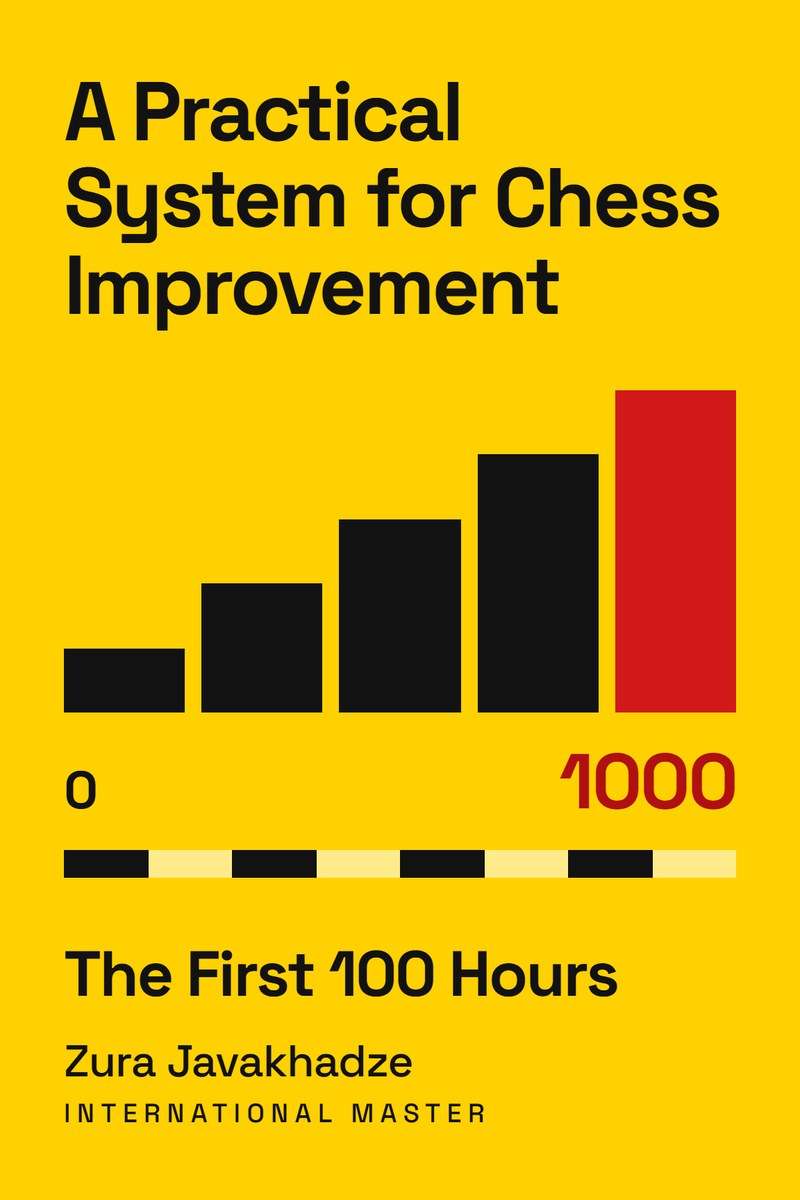
Give me 100 focused hours, and I will take you from your first move to 1000 rating.
Every hour of the next three months is assigned. You will always know what to do today, and you can see the finish line from the start.
30-day refund, no questions
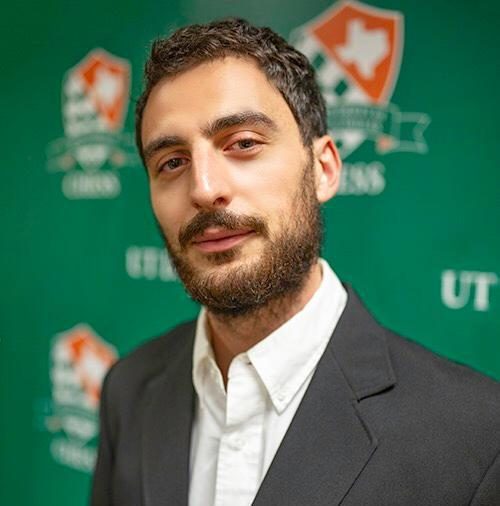
Zura Javakhadze is an International Master and five-time Texas State Champion who has earned all three Grandmaster norms. Over more than ten years of coaching he has taught hundreds of players, from complete beginners to accomplished players like GM Andy Woodward and IM Grayson Rorrer.
Most players don't fail because chess is too hard.
They fail because their training has no structure. They watch videos instead of training. They play a thousand games and learn from none of them. They spend months on openings and lose in the endgame. They quit because the road feels endless and nothing tells them how far they have come.
This book removes the endlessness. One hundred hours, every one of them assigned.
The budget
Every hour, assigned
Nobody else can show you the whole of the next three months before you start. This is the entire curriculum.
What you actually get
Ten chapters, in order
The complete curriculum from the rules of the board to a repertoire you can play, each chapter opening with the hours it costs you.
Thirty companion studies
Required drills hosted on Lichess, linked from the page you are reading. Not optional extras — part of the hours.
The Blunder Prevention Framework
Three pillars and a two-word rhythm that stop you losing games you had already won. Taught, then drilled over 35 exercises.
A minimalist repertoire
One system as White, one against 1.e4, one against 1.d4, plus the London. Ideas rather than theory, with model games.
A method for reviewing games
First mistake, critical mistake, classify the pattern. Three steps, five minutes a game, worked through two full games.
The Training Sheet
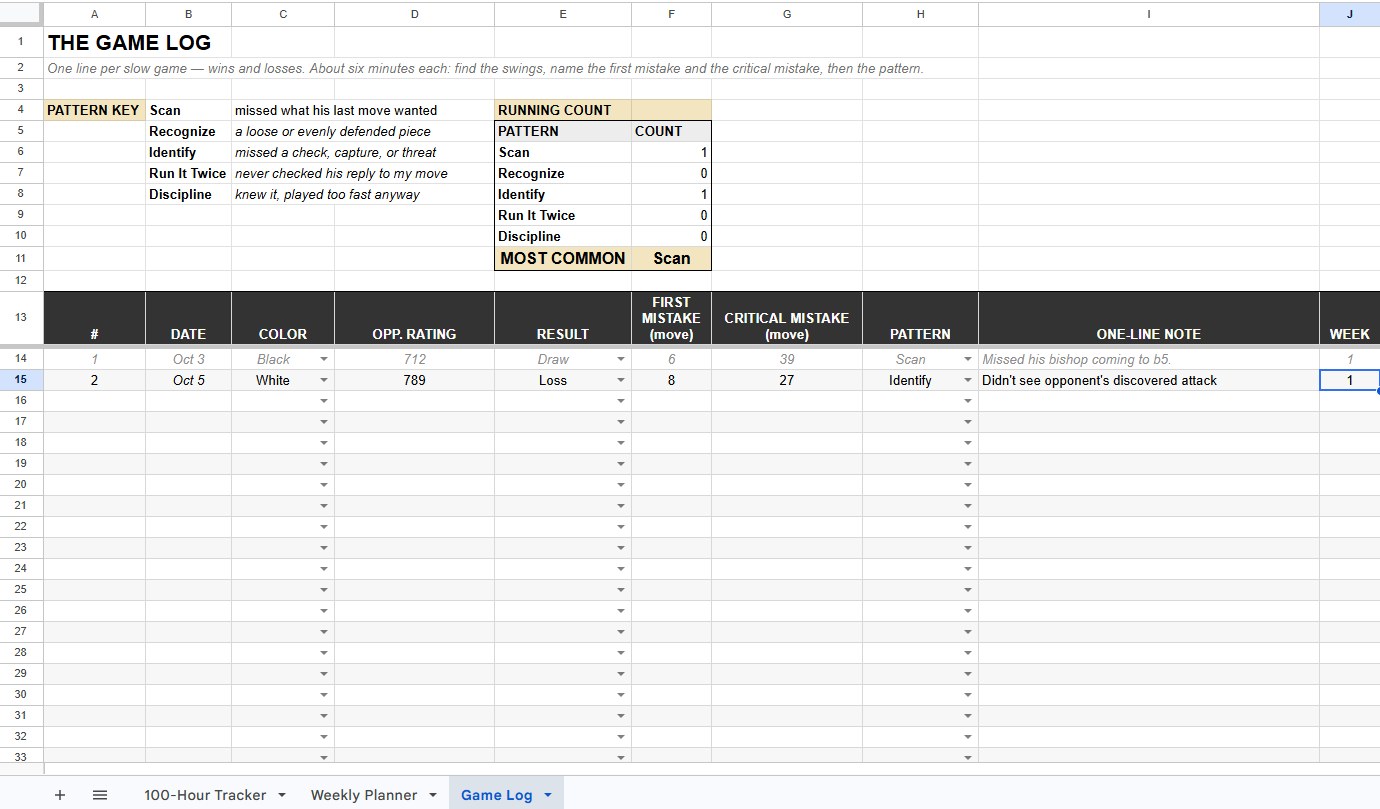
An hour tracker across all nine categories, a weekly planner and a game log. Yours to copy and keep.
A look inside
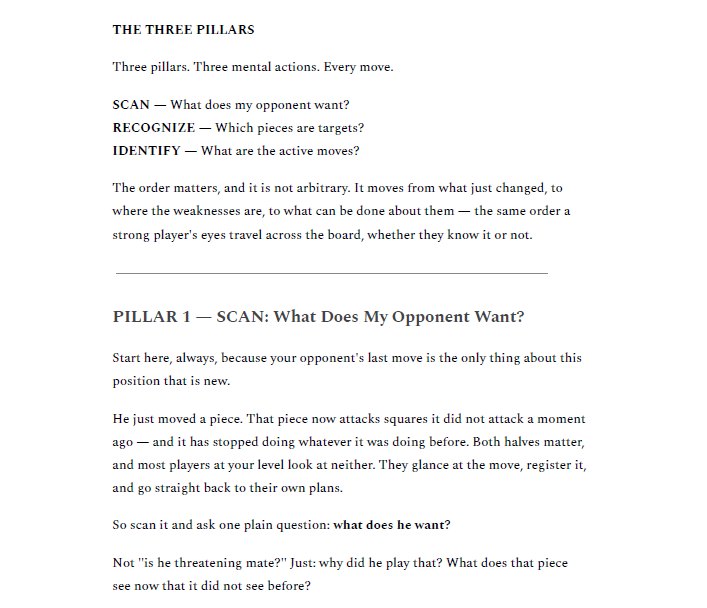
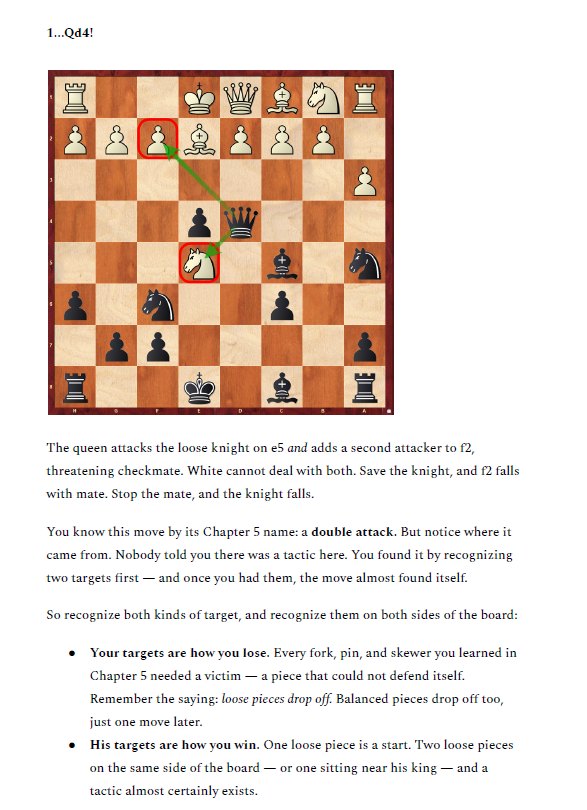
Real pages, not a summary
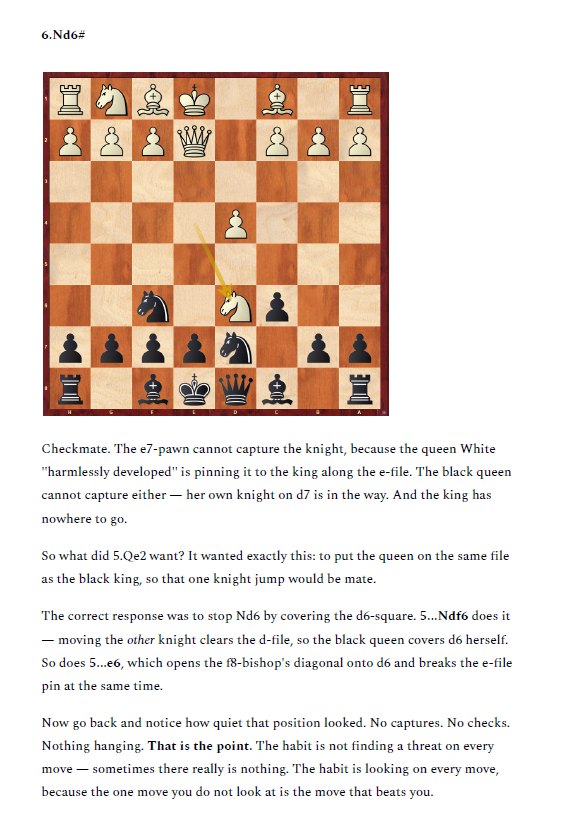
Every idea is worked through on a board, with the position in front of you and the reasoning spelled out.
What this book is not
- It is not an opening book. Openings get eight hours out of a hundred, deliberately.
- It is not for players already above 1200. The system still works up there, but this volume is aimed at the road to 1000.
- It is not a video course. It is a book, with drills you do on a board.
- It is not a shortcut. It is a hundred hours of work, honestly described.
Questions
Do I need a chess.com or Lichess account?
A free Lichess account, yes — the required drills live there. It costs nothing and takes a minute.
What if I am already rated 800?
Start anyway, and skip what you already own. Chapter 4 exists so you can skip it. Most players at 800 have holes in tactics, endgames and blunder prevention that this fills.
Is it suitable for a child?
It is written for an adult beginner, but a motivated junior who reads well will manage it, especially with a parent working alongside them.
What format is it?
A PDF, delivered the moment you pay. It reads best on a tablet or laptop, and prints cleanly on standard paper if you want the drill pages on your desk.
Do I get updates?
Yes, free, forever. I will be correcting and improving this based on what readers tell me, and every update goes to everyone who has bought it.
Does one hour a day really get me to 1000?
A hundred focused hours is what it has taken the students I have coached. Focused is the operative word — an hour of blitz is not an hour of training, and the book is strict about the difference.
What if it is not for me?
Email me within thirty days and I will refund you. No form, no explanation needed.
One hour a day. Three months. A finish line you can see from the start.
Instant PDF download. Free updates for life. Thirty-day refund, no questions asked.
Buy the book — $27